
2 towns
Towns in Extremadura
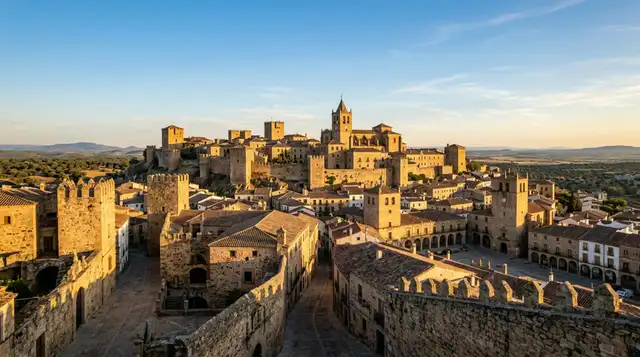
Cáceres
Extremadura
€1,635/m² · Population 96,598
Above the region average
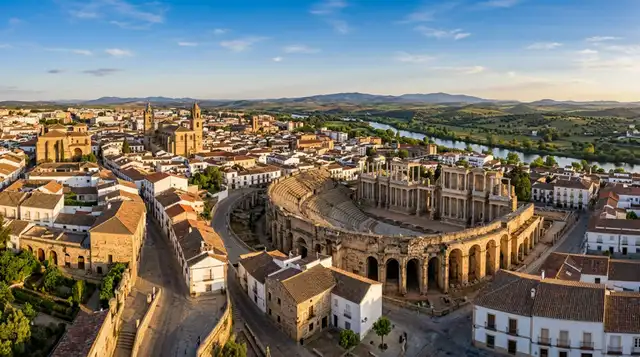
Mérida
Extremadura
€1,225/m² · Population 60,319
Below the region average
About Extremadura
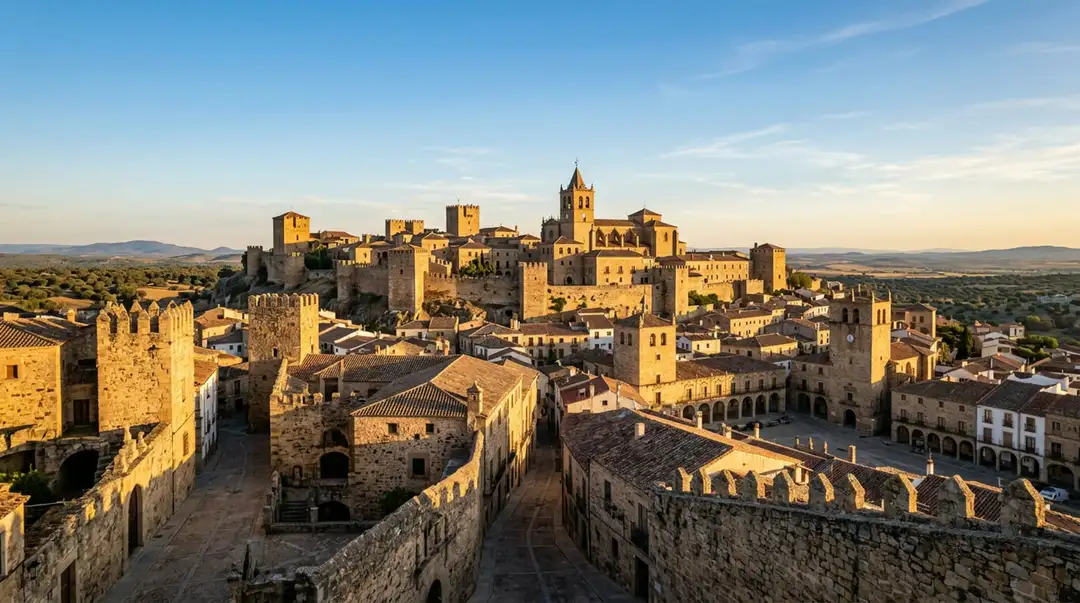
Extremadura, in western Spain on the border with Portugal, is one of the country's quietest and least-known regions. It is a land of wide open spaces, oak pastures where Iberian pigs graze, and historic cities that are among the best preserved in Spain. Cáceres has a medieval old town listed by UNESCO, and Mérida, the regional capital, has some of the finest Roman remains outside Italy.
Life here is calm and unhurried. Summers are very hot and dry, winters are mild and sunny. Rail links with Madrid are still slow, although a faster line is being built, and most people travel by car.
Extremadura has the lowest property prices of any region on the site: Cáceres asks around €1,635/m² and Mérida around €1,225/m². The transfer tax starts at 8%.
What to know first
- The lowest property prices of any region on the site
- Cáceres and Mérida, two historic cities listed by UNESCO
- Wide open landscapes, nature and a calm way of life
- Very hot summers and mild, sunny winters
- Transfer tax of 8%, rising on more expensive homes
Asking prices compared
Ranked on asking price per m². Municipalities and sub-municipal entries are listed apart, because a district cannot be ranked against the municipality that contains it.
| Place | Asking price / m² | Population | Price tier |
|---|---|---|---|
| Whole municipalities | |||
| Cáceres | €1,635/m² | 96,598 | Budget |
| Mérida | €1,225/m² | 60,319 | Budget |
How the prices spread
The case for
- Very low prices
The most affordable region on the site.
- Historic cities
- Space and nature
Wide oak pastures, nature reserves and very little crowding.
- Mild, sunny winters
Winters are mild and dry compared with northern and central Spain.
- A calm way of life
Little traffic, little noise and a relaxed pace.
The case against
- Very hot summers
July and August are among the hottest in Spain.
- Slow rail links
Trains to Madrid are still slow; a faster line is under construction.
- Few flights
Badajoz airport has only a few domestic routes; Madrid and Seville are the main airports.
- No sea
The nearest beaches are in Portugal or Andalusia, several hours away.
- Few international buyers
Fewer services in other languages and a smaller resale market.
Questions buyers ask
- What taxes do I pay when buying?
- On a resale home, 8% transfer tax, rising in steps on more expensive homes. Lower rates apply to some young buyers and large families. New-build homes pay VAT instead of transfer tax. Ask a tax adviser about your situation.
- Why are prices so low?
- Extremadura is sparsely populated, far from the coast and has fewer international buyers than other regions. That makes it one of the most affordable parts of Spain.
- How do I get there?
- Most people drive. Madrid is about three hours from Cáceres, and Seville about two and a half hours from Mérida. Trains to Madrid are still slow.
- What is the climate like?
- Very hot, dry summers and mild, sunny winters.
- Cáceres or Mérida?
- Cáceres for a medieval old town and university life, Mérida for Roman history and the lowest prices.
- Is it close to Portugal?
- Yes. Both cities are less than an hour's drive from the Portuguese border.