Explore Costa de la Luz
Wide Atlantic beaches, dune landscapes and white coastal villages invite an outdoors-focused way of life.
About Costa de la Luz
The Costa de la Luz is Spain's Atlantic side of Andalusia, and it feels different from the Mediterranean from the first day. The beaches are long and wide, backed by dunes and pine forest, the water is cooler and the wind is a constant companion. Life here is less built around tourism: Cádiz and Jerez are working Spanish cities, and the coastal towns keep a strong local character.
A commuter train links Cádiz, El Puerto de Santa María and Jerez, where the airport is. South of Cádiz the towns that people dream about, Conil, Zahara de los Atunes and Tarifa, have no railway, so the car takes over. Tarifa sits on the Strait of Gibraltar, with Africa in view and a ferry to Morocco.
Prices rise as you head south along the beaches. Tarifa asks around €4,411/m², while Jerez, a short train ride inland from the sea, asks under half that. And this coast is moving: in several towns prices rose by double digits in the past year.
What to know first
- Long, wide Atlantic beaches with dunes and pine forest, cooler water and a lot of wind
- A commuter train links Cádiz, El Puerto de Santa María and Jerez; further south you need a car
- Tarifa, Zahara and Conil are the most expensive; Jerez and Isla Cristina the most affordable
- Prices are rising fast, by double digits in a year in several towns
- A strongly Spanish coast: Cádiz has the lowest share of foreign residents of any place on es.casa
Asking prices compared
Ranked on asking price per m². Municipalities and sub-municipal entries are listed apart, because a district cannot be ranked against the municipality that contains it.
| Place | Asking price / m² | Population | Price tier |
|---|---|---|---|
| Whole municipalities | |||
| Tarifa | €4,411/m² | 18,613 | Premium |
| Conil de la Frontera | €3,641/m² | 24,102 | Premium |
| Cádiz | €3,310/m² | 109,950 | Mid |
| El Puerto de Santa María | €2,960/m² | 89,983 | Mid |
| Jerez de la Frontera | €1,953/m² | 213,634 | Budget |
| Isla Cristina | €1,798/m² | 21,525 | Budget |
| Districts, nuclei and urbanisations | |||
| Zahara de los Atunes Nucleus of Barbate | €4,544/m² | No data | Premium |
How the prices spread
The beach towns south of Cádiz are the most expensive: Zahara de los Atunes and Tarifa at the top, then Conil de la Frontera. Cádiz itself, on its peninsula surrounded by sea, sits in the middle, with El Puerto de Santa María just below. Jerez, inland, is much cheaper for a large city with a train and an airport. In the far west, Isla Cristina in Huelva province is the most affordable town on this coast.
The table shows average asking prices, not sale prices. Within one town, prices can vary a lot from one area to the next.
Who each part suits
A real Spanish city by the sea
Old towns full of life all year, beaches within walking distance and a train to Jerez and its airport.
City life on a budget
A large city of sherry, horses and flamenco, with the airport and a train to the coast, at a fraction of beach-town prices.
Wind, waves and the outdoors
One of Europe's kitesurfing capitals and a laid-back surf town, with wide beaches and nature on the doorstep.
Peace and long beaches
Small fishing towns with famously wide beaches that are quiet outside the summer season.
The most affordable coast
A fishing town near the Portuguese border, with long beaches and the lowest prices on this coast.
Cities in Costa de la Luz
Browse properties by city
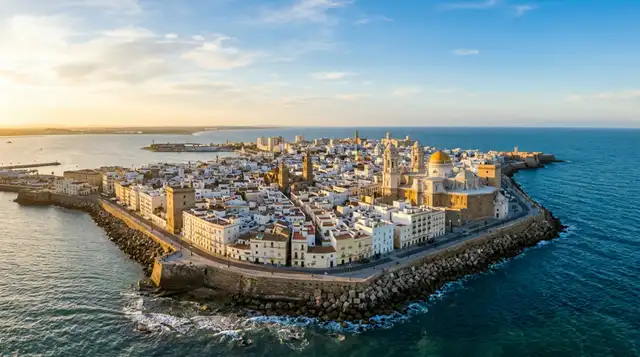
Cádiz
Costa de la Luz
€3,310/m² · Population 109.950
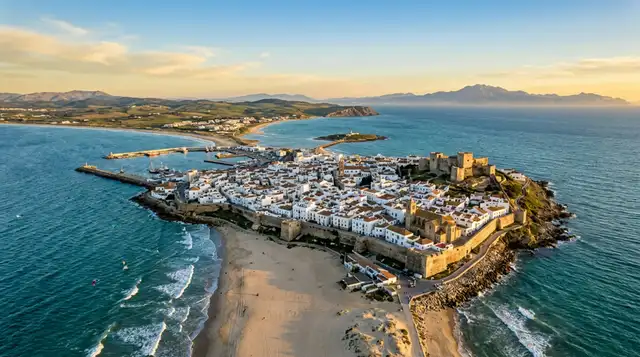
Tarifa
Costa de la Luz
€4,411/m² · Population 18.613
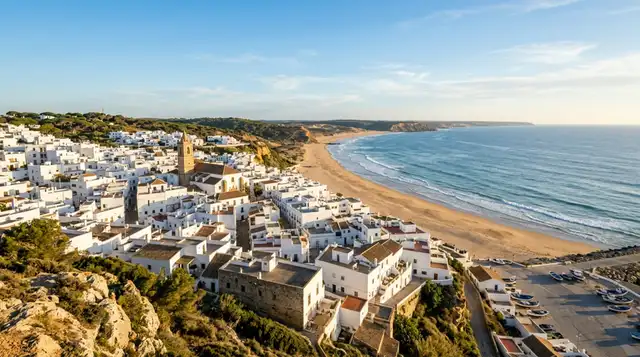
Conil de la Frontera
Costa de la Luz
€3,641/m² · Population 24.102
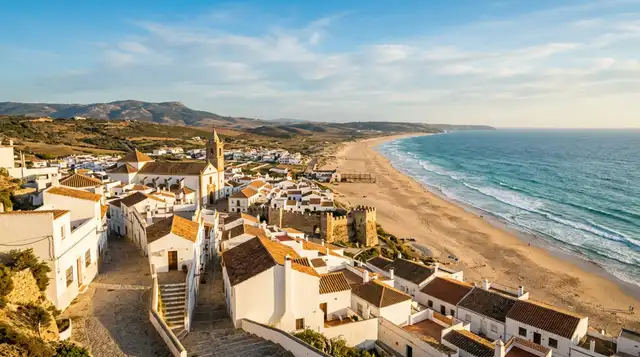
Zahara de los Atunes
Costa de la Luz
€4,544/m²
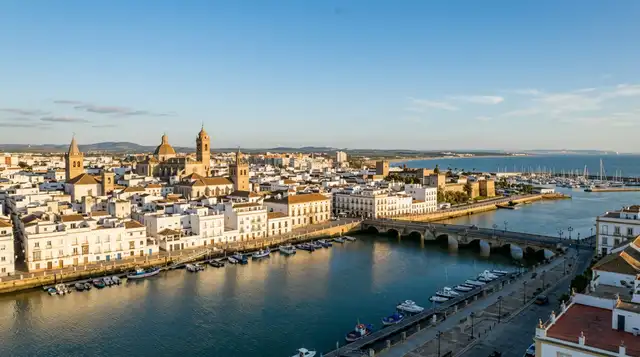
El Puerto de Santa María
Costa de la Luz
€2,960/m² · Population 89.983

Jerez de la Frontera
Costa de la Luz
€1,953/m² · Population 213.634
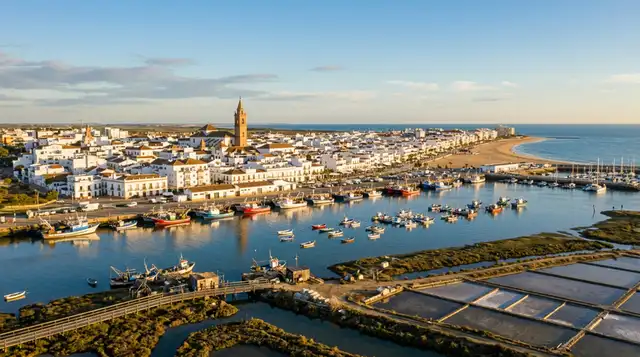
Isla Cristina
Costa de la Luz
€1,798/m² · Population 21.525
The case for
- Some of Spain's finest beaches
Long, wide and often backed by dunes or pine forest, with far less building than on the Mediterranean.
- Authentic Spanish life
Cádiz and Jerez are working cities with their own culture, from carnival to sherry and flamenco.
- A train between the main cities
Cádiz, El Puerto de Santa María and Jerez are linked by a commuter line, with the airport at Jerez.
- Nature everywhere
Protected dunes, salt marshes and pine forests line much of the coast.
- Africa on your doorstep
From Tarifa, a ferry takes you to Morocco in about an hour.
The case against
- Wind
Especially around Tarifa, strong winds blow on many days, perfect for kitesurfing but not for a quiet day on the beach.
- Prices are rising fast
In several towns, prices rose by double digits in the past year.
- No train in the most popular beach towns
In Conil, Zahara and Tarifa you depend on the car.
- A limited airport
Jerez has fewer international flights than Málaga or Seville, so many people fly into one of those instead.
- A cooler sea
The Atlantic is noticeably colder than the Mediterranean, even in summer.
Questions buyers ask
- Which towns have a train?
- Cádiz, El Puerto de Santa María and Jerez de la Frontera, on the same commuter line. Conil, Zahara de los Atunes, Tarifa and Isla Cristina have no station.
- Which airport do I use?
- Jerez is closest for most of the coast. For more flights, many people use Seville, which is also the main airport for Isla Cristina, or Málaga.
- Is it very windy?
- Around Tarifa, yes, which is why it is a kitesurfing capital. Further north, around Cádiz and Conil, it is calmer, though the wind still plays a bigger role than on the Mediterranean.
- Where is it cheapest?
- Isla Cristina and Jerez de la Frontera. Jerez also has a train and the airport.
- Is it a quiet coast?
- Outside July and August, yes. In summer, Spanish holidaymakers fill the beach towns, but there are fewer large resorts than on the Mediterranean.
- Is there an international community?
- Yes, but more spread out: Germans in Conil, Italians in Tarifa and Americans in El Puerto de Santa María, near the naval base at Rota. Cádiz itself is strongly Spanish.
Where you might be better off elsewhere
If you want the warmer Mediterranean, more international services and Spain's best-connected airport, the Costa del Sol is about two hours east. If budget is the deciding factor, the Costa de Almería is clearly cheaper. And if you love this coast's unspoilt character but want calmer water, the quieter villages of the Costa Tropical are worth a look.
Explore nearby regions
Málaga's coast and its western districts, with Marbella, Estepona and Fuengirola among the towns covered.
Granada's subtropical coastline. Almuñécar is the one town covered here.
Almería's desert coast, with Mojácar, Roquetas de Mar and Almería among the towns covered.