Explore Catalonia
City life in Barcelona meets pine-fringed coves and village life in the Catalan countryside.
About Catalonia
Catalonia, in Spain's north-east, combines one of Europe's great cities with two very different coasts. Barcelona is the heart of the region, with culture, beaches and an international airport. To the north lies the Costa Brava, with rocky coves and medieval villages near the French border; to the south the Costa Dorada, with long sandy beaches and Roman Tarragona.
Summers are warm but less hot than in southern Spain, and the region is well connected: high-speed trains link Barcelona and Girona with Madrid and France, and there are airports in Barcelona, Girona and Reus.
Prices vary widely. Barcelona (€5,449/m²) and Sitges (€5,321/m²) are among the most expensive places in Spain, while Tarragona asks €2,100/m². Catalonia also has the highest transfer tax in Spain: 10% as standard, rising in steps on the most expensive homes.
What to know first
- Barcelona, a world city with beaches, culture and an international airport
- Two coasts: the rocky Costa Brava in the north and the sandy Costa Dorada in the south
- Summers less hot than in southern Spain
- Prices from €2,100/m² in Tarragona to €5,321/m² in Sitges and €5,449/m² in Barcelona
- The highest transfer tax in Spain, 10% and rising in steps on the most expensive homes, and strict holiday-rental rules
Asking prices compared
Ranked on asking price per m². Municipalities and sub-municipal entries are listed apart, because a district cannot be ranked against the municipality that contains it.
| Place | Asking price / m² | Population | Price tier |
|---|---|---|---|
| Whole municipalities | |||
| Barcelona | €5,449/m² | 1,713,247 | Premium |
| Sitges | €5,321/m² | 32,690 | Premium |
| Tossa de Mar | €3,458/m² | 6,293 | Mid |
| Roses | €3,439/m² | 20,175 | Mid |
| Girona | €2,828/m² | 108,352 | Mid |
| Salou | €2,747/m² | 31,018 | Mid |
| Lloret de Mar | €2,658/m² | 41,944 | Mid |
| Tarragona | €2,100/m² | 143,260 | Mid |
| Districts, nuclei and urbanisations | |||
| Empuriabrava Nucleus of Castelló d'Empúries | €3,568/m² | No data | Mid |
How the prices spread
Barcelona and Sitges are by far the most expensive places, almost level with each other despite the huge difference in size. The Costa Brava towns, such as Empuriabrava, Tossa de Mar and Roses, sit in the middle, with Girona just below them. The most affordable places are Salou and Lloret de Mar, and Tarragona, the cheapest of all.
The table shows average asking prices, not sale prices. Within one town, prices can vary a lot from one area to the next.
Who each part suits
City life at the top
A world city with beaches, culture, international schools and excellent connections.
Beach town near Barcelona
A lively, cultural seaside town half an hour from Barcelona by train.
A historic city with fast trains
A medieval city with high-speed trains to Barcelona, Madrid and France, at lower prices.
Coves and villages
The Costa Brava, with rocky coves, marinas and medieval villages.
Cities in Catalonia
Browse properties by city
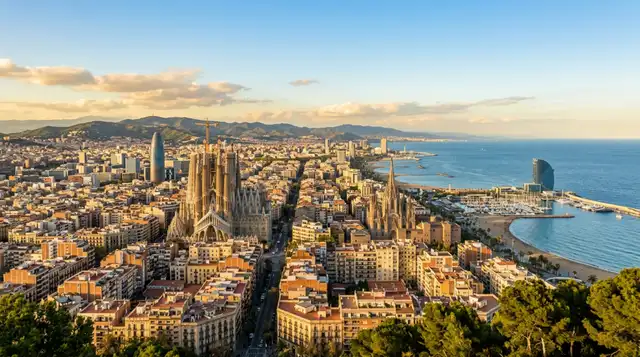
Barcelona
Catalonia
€5,449/m² · Population 1.713.247
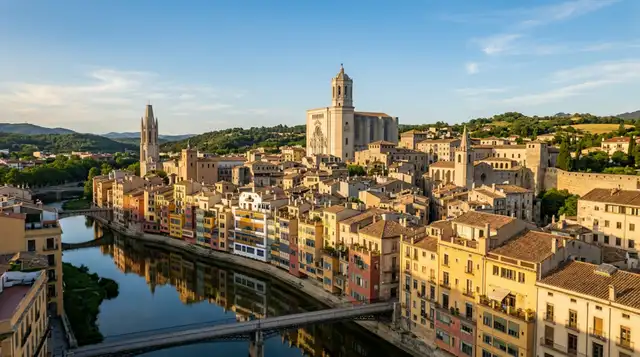
Girona
Catalonia
€2,828/m² · Population 108.352
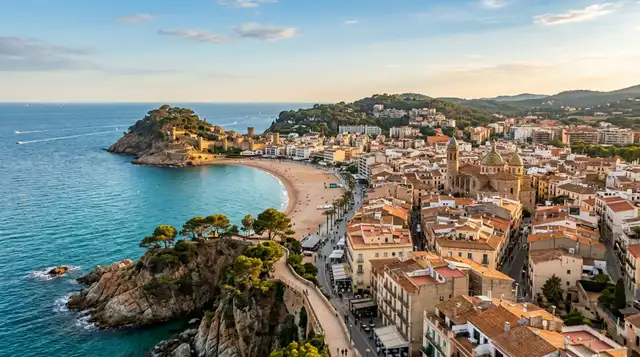
Lloret de Mar
Catalonia
€2,658/m² · Population 41.944

Tossa de Mar
Catalonia
€3,458/m² · Population 6.293
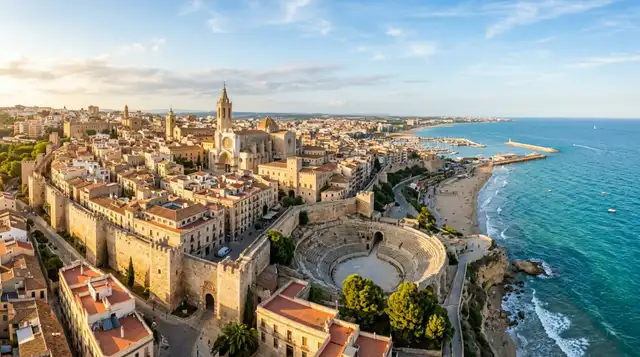
Tarragona
Catalonia
€2,100/m² · Population 143.260
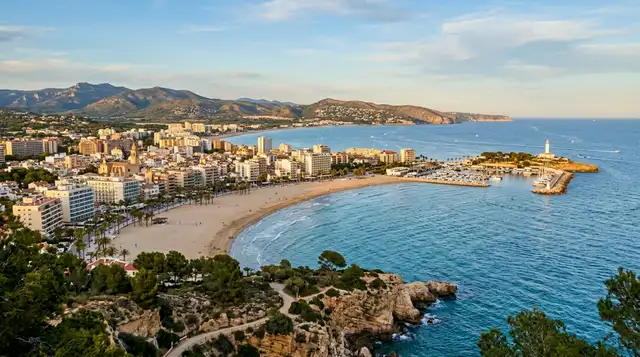
Salou
Catalonia
€2,747/m² · Population 31.018
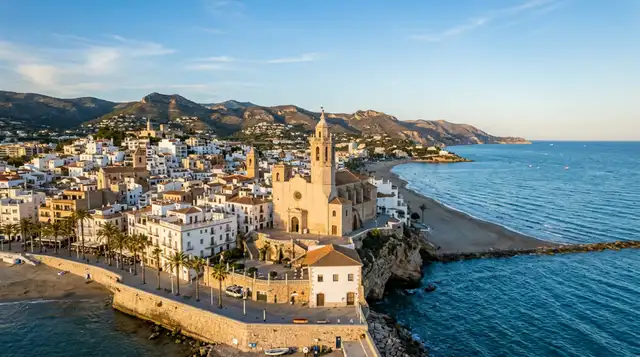
Sitges
Catalonia
€5,321/m² · Population 32.690

Empuriabrava
Catalonia
€3,568/m²
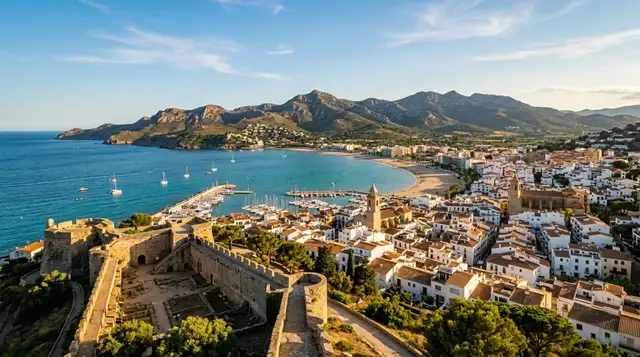
Roses
Catalonia
€3,439/m² · Population 20.175
The case for
- A world city
Barcelona offers culture, international schools and flights all over the world.
- Fast trains
High-speed trains to Madrid and France from Barcelona and Girona.
- Less hot summers
August afternoons are several degrees cooler than in inland Andalusia.
- Two very different coasts
Rocky coves in the north, long sandy beaches in the south.
- Close to France
The border is less than an hour from the Costa Brava.
The case against
- The highest transfer tax in Spain
10% on most homes, rising in steps on the most expensive ones.
- Strict holiday-rental rules
In 262 municipalities, holiday-let licences are capped and must be renewed by 2028. Barcelona plans to end holiday-flat licences altogether.
- Barcelona and Sitges are expensive
Among the highest prices in Spain.
- Two official languages
Catalan is widely used in daily life, schools and local government.
- Wetter than the south
Especially around Girona, there are more rainy days than on the southern coasts.
Questions buyers ask
- What taxes do I pay when buying?
- On a resale home, transfer tax is 10%, with higher bands in steps on the most expensive homes. Some young buyers and large families pay a reduced rate on a main home. New builds pay VAT instead of transfer tax. Ask a tax adviser about your situation.
- Can I let my home to tourists?
- In 262 municipalities, including most of the Costa Brava and Costa Dorada, the number of holiday-let licences is capped, and existing licences must be renewed by November 2028. Barcelona plans to phase them out. Check before you buy.
- Which coast suits me?
- The Costa Brava for coves, villages and nature; the Costa Dorada for long sandy beaches and lower prices; Sitges and the coast near Barcelona for city access.
- How do I get there?
- Barcelona airport has flights all over the world; Girona and Reus have smaller airports. High-speed trains run from Barcelona and Girona to Madrid and France.
- Do I need to speak Catalan?
- Not to live here, as almost everyone speaks Spanish too. But Catalan is widely used in schools and local government.
- Where is it cheapest?
- In Tarragona, Lloret de Mar and Salou.
Where you might be better off elsewhere
If you want lower purchase taxes, Andalusia charges a flat 7%, and the Valencian Community 9%. If you want warmer winters, the Costa Blanca or the Costa del Sol are better. And if you want to let your home to holidaymakers, rules in Catalonia are among the strictest in Spain, so look at regions with more room for holiday lets.